Who does what: plumber or waterproofing contractor
We are a plumbing dispatch service, not a waterproofing contractor. A plumber installs and repairs sump pumps, discharge lines, check valves, and the pipes that carry water out of the house. A waterproofing contractor handles excavation around the foundation, wall membranes, crack injection, and grading.
| Task | Plumber | Waterproofing contractor |
|---|---|---|
| Sump pump install, repair, or replacement | Yes | Often offered as part of a system |
| Discharge line and check valve | Yes | Sometimes |
| Leaking supply pipe or drain pipe | Yes | No |
| Interior drain tile or channel along the footing | Sometimes, depending on the contractor | Yes |
| Exterior excavation and wall membrane | No | Yes |
| Foundation crack injection | No | Yes |
| Yard grading and gutters | No | Landscaper or contractor |
Interior waterproofing: what it is and what it costs you in space
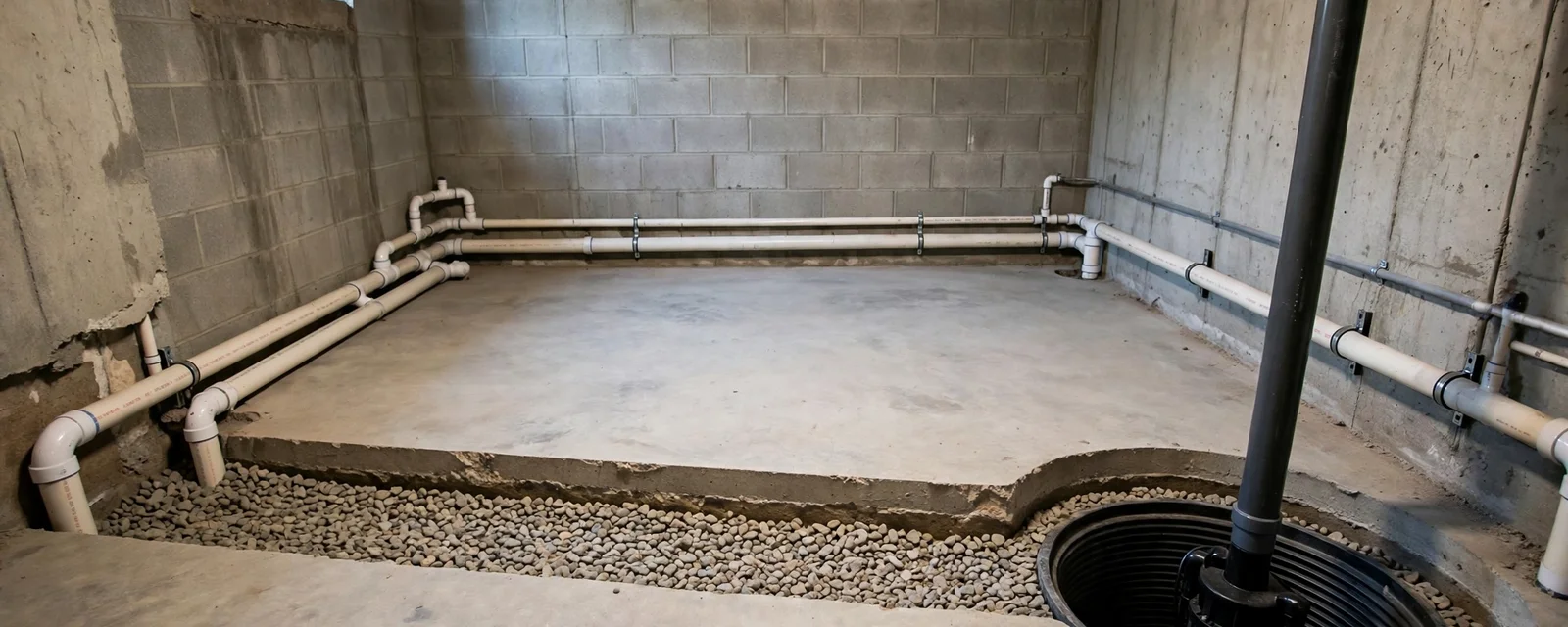
Interior systems cut a channel along the base of the basement wall, lay drain tile or a channel drain, and route water to a sump pit. The pump then sends it out of the house. It works with the water that is already coming through the wall or floor joint, and it does not stop water from reaching the foundation.
The advantages are that the work happens indoors, it does not depend on the weather, and it can be done where the yard is blocked by a patio, deck, or neighbor's fence.
The trade-offs are a cut floor edge, some disruption inside, and a pump that must keep working. If the pump fails during a storm, water stays in the basement.
Exterior waterproofing: what it is and where it fits
Exterior work digs down along the foundation, cleans and seals the wall, and sets drainage at the footing. It aims to keep water off the wall and away from the basement. That makes it more disruptive outside, with landscaping, decks, and walkways often in the way.
Exterior work is often a fit for a wall with steady seepage, a failed existing seal, or a problem that interior drains cannot fully manage.
It is less practical where the house sits close to a property line, a driveway, or a slab. Ask a waterproofing contractor why the method they propose fits your wall, and ask for a written scope.
Side by side
| Question | Interior | Exterior |
|---|---|---|
| Where does the work happen? | Inside, along the basement floor edge | Outside, around the foundation |
| What does it do with water? | Collects it and pumps it out | Blocks it at the wall and drains it away |
| Does it depend on a pump? | Yes | Often yes, though some drain by gravity |
| How disruptive is it? | Indoor dust and a cut floor edge | Digging, landscaping and walkway repair |
| Good for blocked yards? | Yes | Harder |
| Fixes a leaking pipe? | No, call a plumber | No, call a plumber |
Water on the floor right now?
Our dispatch runs 24/7. If the sump pump has failed or a pipe is leaking, call and a licensed plumber can look at it, with a clear price before work starts.
First, rule out the plumbing
- A running water meter with every fixture off can mean a hidden supply leak.
- A wet spot below a bathroom, laundry, or water heater often points to a pipe, not the foundation.
- A wet floor near the floor drain after heavy use points to a drain issue, not groundwater.
- Warm, damp walls near a furnace or heater suggest condensation or a leak, not seepage.
- Water that appears only after rain, along walls or the floor edge, is more likely groundwater.
If the pattern fits a pipe, leak detection can find it without opening walls. If it fits groundwater and you have a sump pit, sump pump service covers the pump, check valve, and discharge. A waterproofing contractor should look at anything that points to the foundation itself.
Winslow Township: a water table that follows the rain
NJDEP's source-water summary describes the Township's water supply as a Kirkwood-Cohansey watertable aquifer system. A watertable, or unconfined, aquifer is one whose levels follow rainfall. In practical terms, after long wet spells the ground water level can rise closer to a basement floor, and a pit that stayed dry in July can fill in March.
Practical tie-back: if your basement only gets wet after prolonged rain, note the dates and compare them to the weather. That record helps a contractor decide whether the cause is the water table, surface drainage, or a failed seal. It also helps a plumber judge whether your sump pump is sized and working for those periods.
Where the sump pump discharges matters too. EPA lists sump pumps, roof leaders, and foundation drains connected to the sanitary sewer among the connections that can overload sewers, so do not send sump water to a sanitary drain.
About 80 percent of the township lies in the Pinelands National Reserve, so ask the Township Construction Office at 609-567-0700 option 5 what an exterior dig or drainage change needs, including whether any Pinelands review applies. The office decides, and permit rules vary.
Where this leaves a Winslow homeowner
Start with the cause. Map when water appears, check for pipe leaks, and test the sump pump by pouring water into the pit until the float lifts the pump. If the pump does not start, or runs without moving water, call a plumber right away, because that is a repair and not a project.
If the water enters through the wall or floor joint, get two written proposals from waterproofing contractors. They should describe the cause they found, the method, what is included, and how the system drains.
Homes in 08081, 08095, and 08004 range from older houses to 1970s-era Levitt homes in Sicklerville, and each foundation is different. Our plumbers also serve Berlin Borough and Waterford Township.
Questions Winslow homeowners ask
It depends on where the water enters and what the yard allows. Interior systems manage water after it gets in, and exterior systems keep it out of the wall. A contractor should explain why the method fits your wall.
A plumber installs and repairs sump pumps, discharge lines, and check valves, and fixes leaking pipes. Excavation, wall membranes, and crack injection are waterproofing work. Ask any plumber what their scope includes.
A pump removes water that collects in the pit. It does not stop water from reaching the foundation. Think of it as the part of the system that gets water out of the house.
The township's water supply aquifer is described by NJDEP as a watertable system whose levels follow rainfall. After long wet spells, groundwater can rise toward the basement floor. Track the dates to help a contractor decide the cause.
No. EPA lists sump pump connections among those that can overload sanitary sewers. Ask the Township Construction Office or the DMU what applies to your property.
Call a plumber if the pump fails, the discharge line leaks, or water appears below a bathroom, laundry, or water heater. Call a waterproofer for wall seepage, foundation cracks, or exterior drainage.
Sources and standards
Facts on this page come from these public sources. Check local rules with the office named in each.