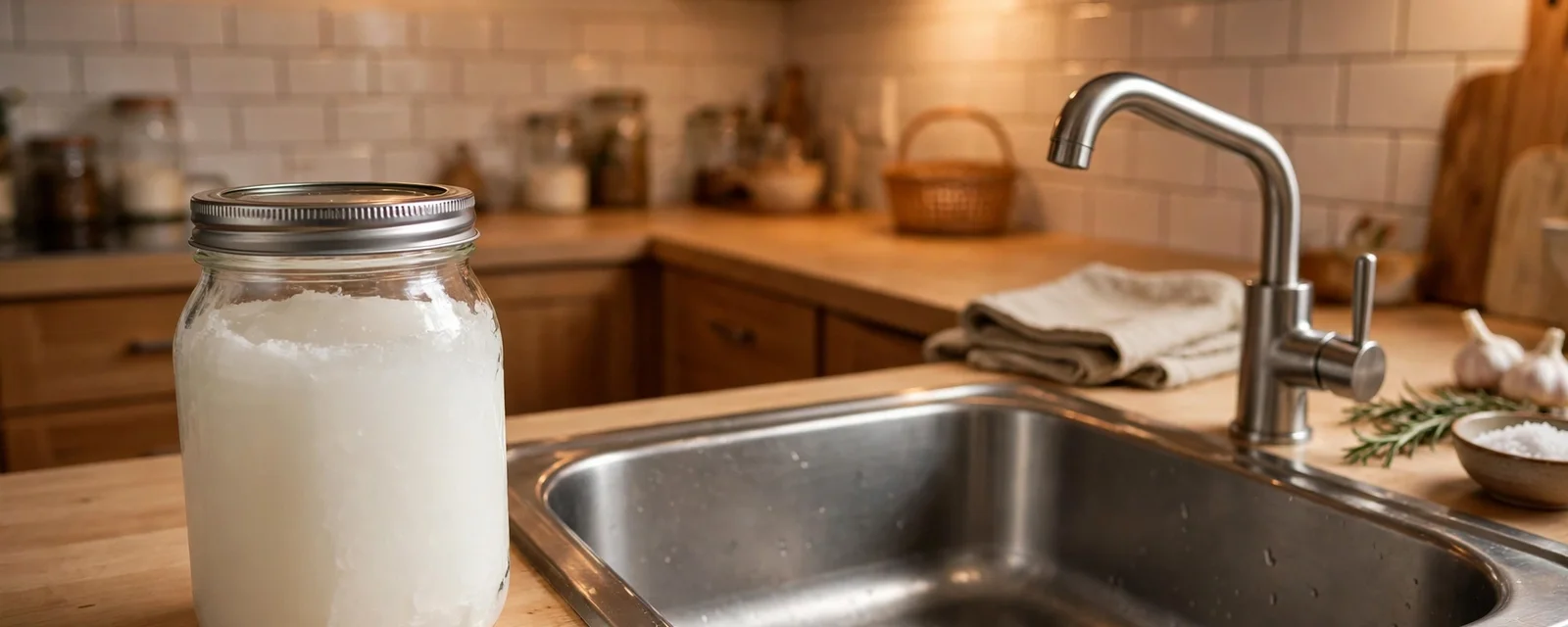
The short answer, and why hot water does not help
Coconut oil is a fat, and fats behave alike in a pipe. A federal EPA fact sheet says it this way. "Grease is problematic because it solidifies, reduces conveyance capacity, and blocks flow." The same sheet says EPA's Report to Congress named grease from restaurants, homes and industry as the most common cause of reported blockages.
Coconut oil turns solid in a cool kitchen or a cold pipe. That means a spoonful rinsed down the sink with hot water can harden a few feet past the trap, where you cannot see it. Over weeks, each rinse adds another thin coat.
What happens inside the pipe, step by step
The oil leaves the sink warm
Hot dishwater carries the oil past the trap and into the horizontal drain line under the floor or in the wall.
It cools and sticks
As the pipe walls cool the water, the oil hardens into a waxy film that clings to the pipe instead of flowing out.
Other debris joins it
Coffee grounds, rice, pasta starch and soap scum stick to the film, so the opening gets narrower each week.
The sink slows and gurgles
Water drains slowly, air bubbles back through the trap, and a sour smell can rise from the sink.
The line closes
A final food scrap or a heavy rinse seals what is left of the opening, and the sink stops draining.
Coconut oil compared with other things people pour down the sink
| What goes down | What it does in the pipe | Better habit |
|---|---|---|
| Coconut oil | Cools and hardens into a waxy coating that traps other debris | Let it cool in a jar or can, then put it in the trash |
| Bacon grease and meat fat | Sets solid quickly and builds thick layers | Pour into a can, chill, and throw away with the trash |
| Olive or vegetable oil | Stays liquid longer but still counts as grease and coats pipe walls | Wipe the pan with a paper towel before washing |
| Melted butter | Hardens as it cools and mixes with food scraps | Scrape the dish into the trash first |
| Dish soap with hot water | Helps rinse a clean dish but does not dissolve a fat layer already in the line | Use a sink strainer and wash greasy pans after wiping |
| Coffee grounds and rice | Settle in bends and bind with any grease already there | Compost or trash them, never rinse them down |
What to do with coconut oil and other cooking fats
- Let used oil cool completely in the pan, then pour it into a sealable jar or an empty can.
- Throw the sealed container in the household trash. Do not flush it or pour it into a storm drain.
- Wipe greasy pans and plates with a paper towel before they reach the sink.
- Use a mesh sink strainer so food bits do not join the oil in the trap.
- Skip the garbage disposal for fats. A disposal chops food, but it does not stop grease from setting in the pipe.
- Check your drain line if the sink drains slower in cold weather, since cooler pipes set fat faster.
Sink already draining slowly?
Our dispatchers can book a drain check, and a licensed plumber can tell you what is in the line before any work starts.
A slow sink now: what is safe to try and when to stop
Stop running hot water and stop the dishwasher if it shares the drain. Pouring more water on a partial blockage can push it deeper and may bring dirty water back up into the sink. Remove the strainer and any visible food, and use a plain plunger on a single-bowl sink with the overflow hole blocked by a wet cloth.
Never mix drain cleaning products. Chemicals can splash, release fumes in a closed kitchen, and sit in the pipe for the plumber to handle later. If the plunger does not clear it in a few tries, or if more than one fixture is slow, stop and call. A multi-fixture slowdown points to the main line, not just the kitchen sink.
When snaking is not enough
A cable can punch a hole through a grease plug and leave the pipe wall coated with the rest. The sink works for a few weeks, then the clog returns. That pattern is common with fat buildup, which is why drain cleaning for grease often starts with a cable and a camera look at what is left behind.
If the camera shows a heavy coating, high-pressure water can scour the pipe wall clean. Our page on hydro jetting explains when that makes sense and when an older or damaged pipe is better left alone. A plumber should show you the footage before recommending either one.
Winslow Township drains: sewer, septic, and who to ask
Not every Winslow street drains the same way. The Township's Department of Municipal Utilities (609-567-0700) handles sewer connections, and the Township's own page sets out the process: the owner applies at the DMU and pays the published $3,998 connection fee plus a $5 application fee.
Camden County Municipal Utilities Authority (CCMUA) then approves a separate application, the Construction Department issues a permit, a registered plumber makes the connection, and the Township plumbing inspector must approve it before quarterly sewer billing starts.
Why this matters for cooking oil: if your Sicklerville or Cedar Brook home is on the public sewer, grease that gets past your drain trap ends up in a shared system that EPA lists as a known cause of blockages and overflows.
If your home is on a septic system, ask a septic contractor how oil affects your tank, because we address the plumbing inside the house and not the tank or field. Call the DMU to confirm which one your street uses.
Many Sicklerville homes date to the 1970s Levitt & Sons building boom in Winslow Crossing. Drain lines that old have had decades to collect residue, so a repeating kitchen clog is worth a camera look rather than another bottle of cleaner. We do not state what pipe material any given street has. The footage tells you.
Where your plumber looks first
Trap and tailpiece
Often the first spot where oil and food bits pile up under the kitchen sink.
Horizontal run
The flat section behind the wall, where oil settles and hardens.
Vent and stack
A partly blocked vent slows draining and can mimic a grease clog.
Main drain
If other fixtures gurgle or back up, the blockage may be past the kitchen.
Homeowners in Berlin Borough and Gloucester Township deal with the same kitchen habits, and we cover both areas. See plumbers serving Berlin Borough or our Gloucester Township coverage if you live just across the line from Winslow. Each town has its own utility offices, so ask your local office about sewer rules.
Questions Winslow homeowners ask
Small amounts add up. Each spoonful cools and coats the pipe wall, and the coating catches food scraps. A single rinse may cause no problem, but a habit of rinsing oil down the sink leads to a slow drain over weeks or months.
Hot water only moves the oil farther down the line before it hardens. It does not dissolve or break it up. The safer way is to let the oil cool in a jar and put it in the trash.
Coconut oil is solid at cool room temperatures, so it hardens in a cold pipe. Olive oil stays liquid longer, but EPA still treats cooking oils as grease. Neither belongs in the drain.
Soap helps clean a dish, but it does not clear a fat layer that has already hardened in the pipe. Treat soap as a rinse aid and not a fix for a clog.
We suggest not mixing or stacking products, and a licensed plumber can tell you what the pipe needs. If the clog is grease, a cable or high-pressure water usually clears it more reliably. Call if the sink does not drain after a plunger attempt.
It depends on the street. The Township's Department of Municipal Utilities can tell you at 609-567-0700, and they handle sewer connection applications. If you are on septic, a septic contractor handles the tank and field, and we handle the plumbing inside the house.
Sources and standards
Facts on this page come from these public sources. Check local rules with the office named in each.