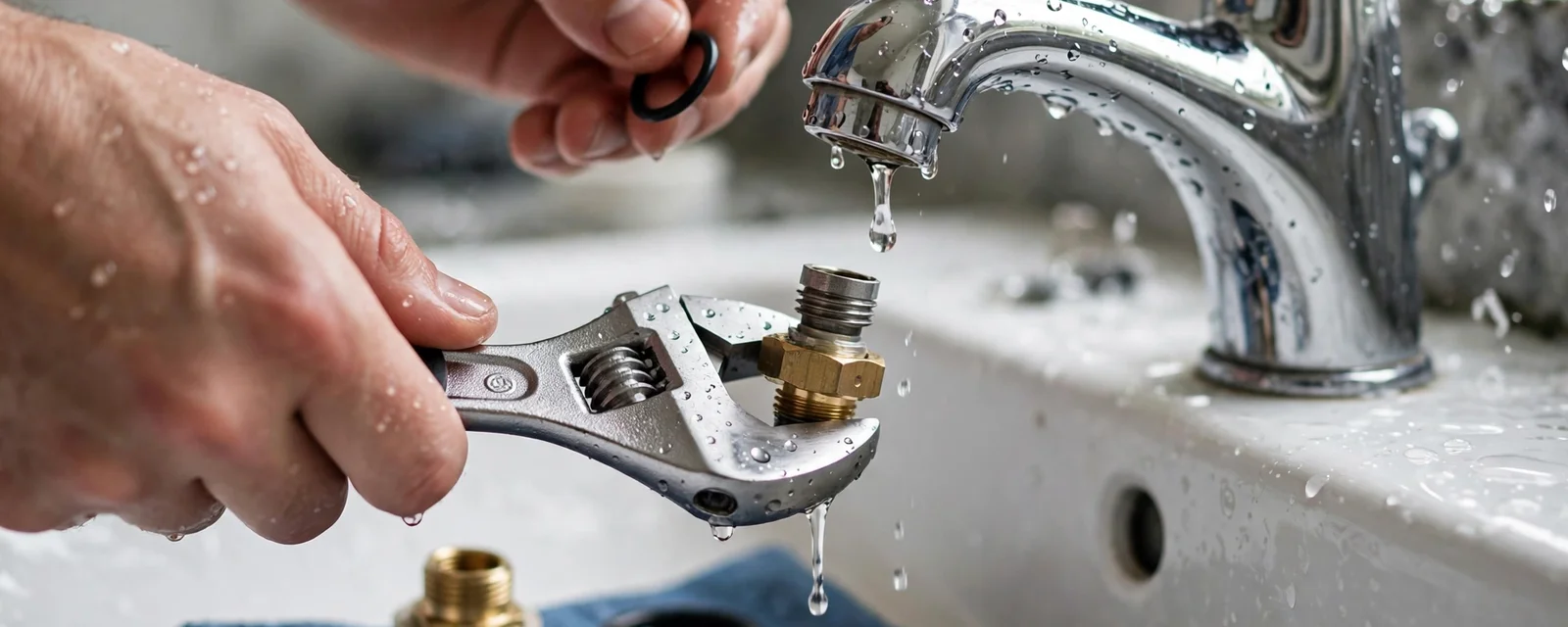
Start with the type of faucet you have
| Faucet type | How to spot it | Part that usually wears | Usual repair |
|---|---|---|---|
| Compression, two handles | Handles turn several times to close | Rubber washer and seat | Replace the washer, resurface or replace the seat |
| Cartridge, one or two handles | Smooth motion, no stiff stop | Cartridge or O-rings | Replace the cartridge to match the model |
| Ball, single handle | Round cap under the handle | Springs, seals and cam | Replacement kit, or swap the faucet |
| Ceramic disc, single handle | Wide cylinder under the handle | Seals in the disc cylinder | Replace the cylinder or seals |
If you cannot tell, take the handle off and photograph what you see. A plumbing supply counter can often match a cartridge from a clear photo or the old part.
Steps for a basic drip repair
Close the shutoff valves
Turn the small oval handles under the sink clockwise. Open the faucet to drain the line and plug the drain so no small screws are lost.
Remove the handle
Pry off the decorative cap, remove the screw underneath and lift off the handle. Use a cloth on the finish to avoid scratching.
Pull the worn part
Remove the retaining nut, then lift out the cartridge, stem or cylinder. Note the order of washers and rings.
Replace and reassemble
Install the matching part, coat O-rings lightly with plumber's grease, and put everything back in the reverse order.
Turn on slowly and check
Open the shutoffs, run the faucet and watch the base, spout and supply lines for moisture.
Stop if the shutoff valves will not close
Under-sink shutoffs that are stuck, crusty or drip when you turn them are a sign to stop. Forcing them can break the valve and flood the cabinet. Shut off the main water to the house and call a plumber.
Take your time with the reassembly, since a handle put back crooked or a nut left loose will bring the drip back by the next morning. If the new part still leaks after one careful try, stop and call a plumber instead of stacking parts on a bad seat.
Leaks that are not the faucet
A faucet that looks like it leaks can hide a different problem, and the wrong repair wastes an afternoon. Water under the sink may come from the supply line, the shutoff valve or the drain trap. Dry each connection with a paper towel and see which one gets wet first.
A wet spot on the ceiling below the bathroom, a stain on the vanity floor or a faint running sound with all fixtures off can point to a leak in the wall or floor. In that case a plumber with leak-finding tools can help, and leak detection is the right starting point rather than replacing parts at random.
Keep the old part in a bag and bring it to the supply counter. Matching a cartridge by eye is the step where most second trips begin, and a clear match on the first visit saves the afternoon.
Repair or replace the bathroom faucet?
| What you see | Better choice |
|---|---|
| Slow drip from the spout, faucet otherwise smooth | Repair, replace the cartridge or washer |
| Corroded or pitted finish, mineral crust at joints | Replace |
| Leaking at the base or at the supply connections | Replace the faucet or supply lines |
| Handle is loose or stripped | Repair if parts are available, otherwise replace |
| Faucet is decades old and parts are discontinued | Replace |
Cabinet getting wet?
Close the shutoff valves, empty the cabinet and call. Same-day appointments are offered when available, and dispatch runs around the clock.
Winslow water bills and what a drip can add
Winslow Township warns that a jump in the water bill can point to an undetected leak, with toilets and shower heads as its examples. A dripping faucet is one more, and the gallons add up over a month. If your bill jumps and the faucet drips, fix the drip and then check the toilets.
For help reading your account or questions about water service, call the Township's Department of Municipal Utilities at 609-567-0700, weekdays 8:30 to 4:30. The Township's water report does not list a hardness figure, so if white crust forms on your fixtures, test your tap and ask the DMU for the annual report.
A faucet replacement rarely raises big permit questions, but the Construction Office at 609-567-0700, option 5, has the final word. Licensed work in the state follows the 2021 National Standard Plumbing Code Illustrated.
What shapes the cost of the repair
A cartridge swap is a small job. A damaged valve or corroded supply line makes it larger.
Insurers typically cover sudden damage rather than wear or neglect, so a worn faucet is your cost. A faucet that wore out is a maintenance cost. A sudden supply line failure that floods the floor may be covered, so ask your carrier.
Houses in Sicklerville (08081) and Winslow (08095) can have fixtures of many ages, so match parts to the model on your sink and not to the house.
If you would rather skip the parts run, our faucet repair service sends a licensed plumber to fix or swap the fixture, and the visit often covers the shutoff valves and supply lines too. We also serve Hammonton and Waterford Township, where the same steps apply.
Questions Winslow homeowners ask
A worn cartridge, washer or ceramic disc seal is the usual cause. Shut off the supply under the sink and replace the part that matches your model.
Yes, if the shutoff valves under the sink close fully. If they will not, close the main shutoff to the house and call a plumber.
If the faucet is corroded, leaks at the base or has discontinued parts, replacement is usually the better choice. A simple drip from an otherwise smooth faucet is often a cartridge repair.
It can. A steady drip adds gallons, and the Township lists leaks as a reason for a higher bill, so fix the drip and check toilets too.
For a like-for-like swap, call the Construction Office at 609-567-0700, option 5, to confirm nothing more is needed.
That is mineral buildup. The Township's water quality report does not publish a hardness figure, so test your tap and ask the Department of Municipal Utilities for the annual report.
Sources and standards
Facts on this page come from these public sources. Check local rules with the office named in each.