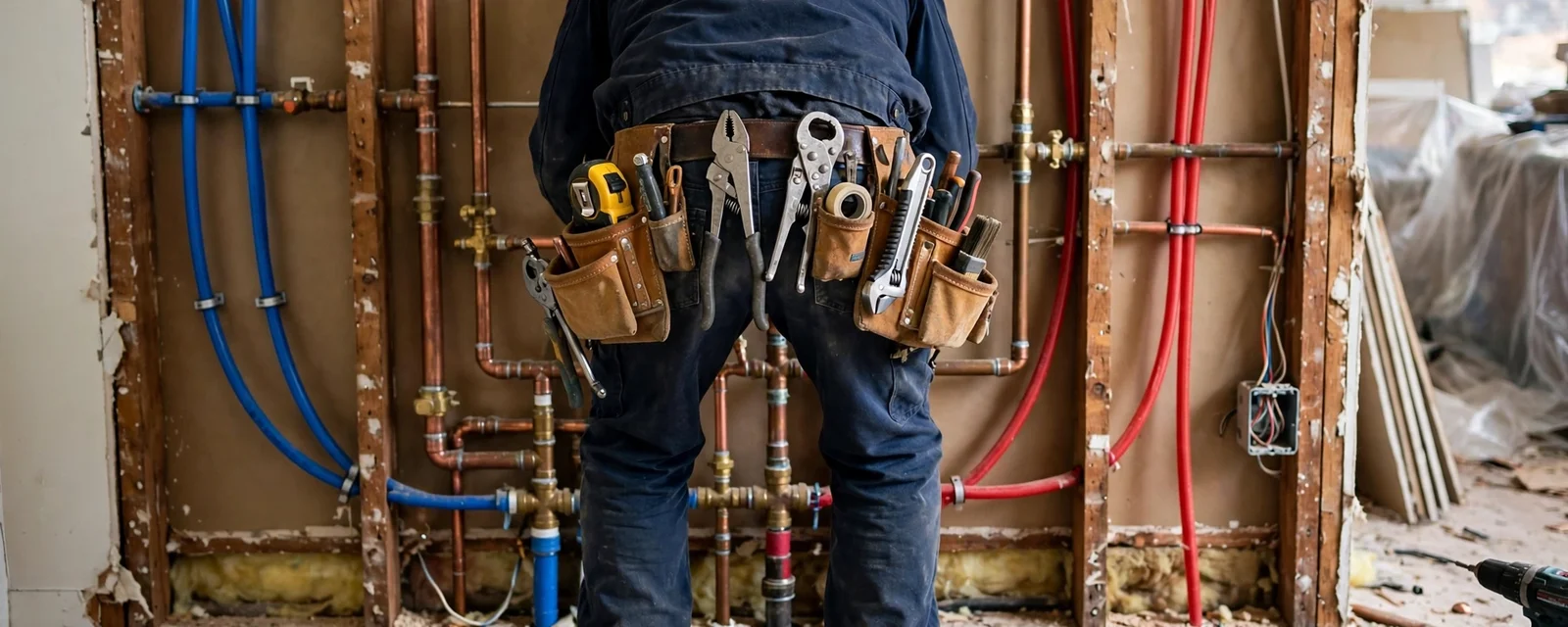
My water looks rusty and the pipes keep leaking. Do I need new pipes?
Not always. Brown water, pressure that has dropped over the years, and a second or third leak in different spots are the signs that make plumbers start talking about replacing the pipes instead of fixing them one at a time.
The technical name for that is repiping, and the usual question is whether the problem is the pipe or something else.
Brown water at one tap can be a sediment issue in a single run. Low pressure at every fixture can be a partly closed valve, a failing regulator or a problem with the service line in the yard. The plumber separates those causes from true pipe failure before suggesting replacement.
Signs the pipes themselves are failing
- Pinhole leaks or green and white crust on pipes at more than one point.
- Water that runs brown or orange when first opened, then clears.
- Pressure that is weak at several fixtures and has not come back after valves are checked.
- Visible flaking, swelling or rust at joints and fittings.
- Repeated repairs on the same line over a short period.
- A water bill that rises with no change in use, and no leak at the fixtures.
No single sign proves a pipe is finished. A plumber looks at the material, the joints, the pressure and the history of repairs together. That is also why we do not guess pipe condition from a house's age alone.
Galvanized replacement
Galvanized steel pipe is zinc-coated, and over decades the inside can narrow as rust and scale build up. Water flow drops, and thin spots eventually leak. If a home in Winslow has galvanized supply pipe, replacement is often the answer, since patches in one section do not fix the corrosion in the rest.
We make no claim about what any particular subdivision was built with. Pipe materials depend on when the house was built and what has been replaced since. A plumber can identify the material in a few minutes by looking at the pipe where it enters the house and at the fixtures.
| Situation | Spot repair | Replace the run or the house |
|---|---|---|
| One leak in an otherwise sound pipe | Reasonable | Not needed |
| Leaks keep appearing in new places | Short term only | Usually the better path |
| Narrowing and low pressure through the house | Does not fix it | Replacement restores flow |
| Rust-colored water at every tap | Not a fix | Often points to replacing steel pipe |
| Planned remodel with open walls | Possible | A good moment to replace |
Not sure whether to repair or repipe?
Call (609) 547-1417 and describe what you see. A plumber can look before you commit, and same-day appointments are offered when available.
How a whole-house repipe is sequenced
Survey the system
The plumber checks pipe material, water pressure, shutoffs, the water heater connections and the service line.
Plan the route
Pipes follow the existing paths where they can. Access points in closets, basements or crawlspaces are chosen to limit wall openings.
Shut off and replace
The water is turned off for the duration of each section. Supply lines are replaced fixture by fixture, and the homeowner is told when water will be out.
Test and restore
The new system is pressure tested before walls are closed. Drywall and paint are patched or handed off to a separate trade.
Inspect
Permit rules vary, and the Construction Office decides whether an inspection is required. Plumbing inspections are held Tuesday to Thursday mornings.
Planning matters more than the pipes themselves. Water may be off for part of a day, depending on the size of the house and the number of bathrooms. A good plumber tells you which fixtures work when, so a family can keep a kitchen or bathroom usable while the job runs.
Winslow homes, ages and what they mean for pipes
Levitt & Sons built thousands of homes in Sicklerville during the 1970s, and many other Winslow houses date from the same growth period. Homes of that age are now past fifty years old. Whatever the original material, the useful question is how the pipes have held up, and a pressure test and visual check answer it better than a calendar.
If you own a home in 08081, 08095 or 08018 and have had a leak in the walls or under a slab, the cheaper step is often to find the leak first. A leak detection visit pins down where water is escaping, so you can judge whether one failed section or the whole system is at fault.
Most of Winslow is on the Township water system, which the Department of Municipal Utilities says draws from wells in the Cohansey and Mount Laurel-Wenonah aquifers, with a connection to New Jersey American Water.
The Township does not publish a hardness figure, so test your tap before assuming water chemistry is damaging pipes. The Township's water quality report is available from the Department at 609-567-0700.
Not every low-pressure problem is inside the house. A weak flow can start at the street connection or the line from the meter, which falls under water line repair. Check that before paying to replace the interior pipes.
What decides the price of a repipe
There is no useful flat number for repiping a house, because the work depends on the home. You get a clear price before work starts, after the plumber has seen the pipes.
Homeowners insurance typically responds to sudden water damage, not to pipes that wore out or were neglected. A burst pipe that floods a room may be covered while the pipe replacement often is not. Ask your carrier before work starts.
If a section of pipe splits while you are deciding, burst pipe repair stops the water first, and repiping can be scheduled afterward with a calmer head. New Jersey requires plumbing work to be done by a licensed plumber, and a license number belongs on the contractor's truck and paperwork.
Repiping questions in Winslow, NJ
Look for several signs together, such as repeated pipe leaks, rust-colored water, weak pressure at many fixtures and visible corrosion at joints. One leak by itself rarely means the whole house needs new pipes. A plumber can inspect the system and tell you which category applies.
Galvanized steel corrodes from the inside over time, which reduces flow and eventually causes leaks. If your home has it, ask a plumber to inspect it. Questions about what the water itself contains belong with your water utility, and your tap can be tested.
It depends on the size of the house and the plan. Your plumber should explain which sections will be off and when, and set expectations before the work starts, rather than leaving it open.
Often some openings are needed, but a good plan limits them. Access through basements, closets and attics reduces cutting, and patching drywall is usually a separate trade.
Permit rules vary by the work, and the Construction Office decides. Call 609-567-0700, option 5, or email construction@winslowtownship.com. Plumbing inspections are held Tuesday to Thursday mornings.
Often yes. Fix the leak, ask the plumber about the condition of nearby pipes, and keep an eye on pressure and bills. If a second leak shows up soon, that is usually the point to price a full replacement.
Yes. Winslow ZIPs 08081, 08018 and 08004 are all served, and we cover Gloucester Township next door as well.
Sources and standards
Facts on this page come from these public sources. Check local rules with the office named in each.